Leave Your Message

2026 Top Eco Friendly Gloves for Global Buyers

In 2026, Eco Friendly Gloves are no longer a niche choice for global buyers. They are part of wider efforts to reduce waste without sacrificing fit, grip, or dependable protection. Yet “eco-friendly” can mean many things. A glove made with recycled content may still have limited end-of-life options, while a reusable glove can require careful cleaning and longer use to make sense.

The details matter. A warehouse team may need abrasion resistance and secure grip; food handlers may value easy cleaning and comfortable cuffs. Natural rubber, recycled fibers, and plant-based coatings each bring different strengths and limitations. Claims such as “biodegradable” also depend on material composition and disposal conditions. Labels can be messy. Buyers should check product specifications, test samples in real working conditions, and ask suppliers for clear material and performance information.

This guide compares leading glove options for 2026, with attention to materials, intended use, durability, comfort, and sourcing considerations. It also recognizes that no single glove suits every market or task. A lower-impact material is not automatically the better choice if it wears out quickly or fails to meet workplace needs. That is an imperfect trade-off, and worth examining. Careful evaluation helps purchasing teams balance practical performance with more responsible material choices, while avoiding vague promises that are difficult to verify.

2026 Top Eco Friendly Gloves for Global Buyers

Defining Eco-Friendly Gloves and Their Environmental Impact

Eco-friendly gloves are not defined by a green color or a single “natural” ingredient. Their environmental impact depends on the full product: raw materials, manufacturing, transport, useful life, and disposal. Some options use recycled fibers, responsibly sourced natural rubber, or bio-based polymers. Yet blends, grip coatings, and finishes can complicate recycling. That matters.

A useful comparison looks beyond material claims. Ask suppliers for a clear composition breakdown and evidence supporting environmental statements, such as independently verified product data or lifecycle assessments. Check manufacturing details too: water and energy use, waste controls, and packaging can affect the overall footprint. For daily work, durability counts. A glove that lasts longer may reduce replacements, but reuse is not suitable for every task or hygiene requirement. Disposal also varies by material and local facilities; “biodegradable” does not mean it will break down quickly in ordinary conditions. There is no flawless option, and available data can be incomplete. Buyers should compare like with like, note what is unknown, and avoid treating one attractive feature as proof of low impact.

Key Sustainable Materials Used in Gloves in 2026

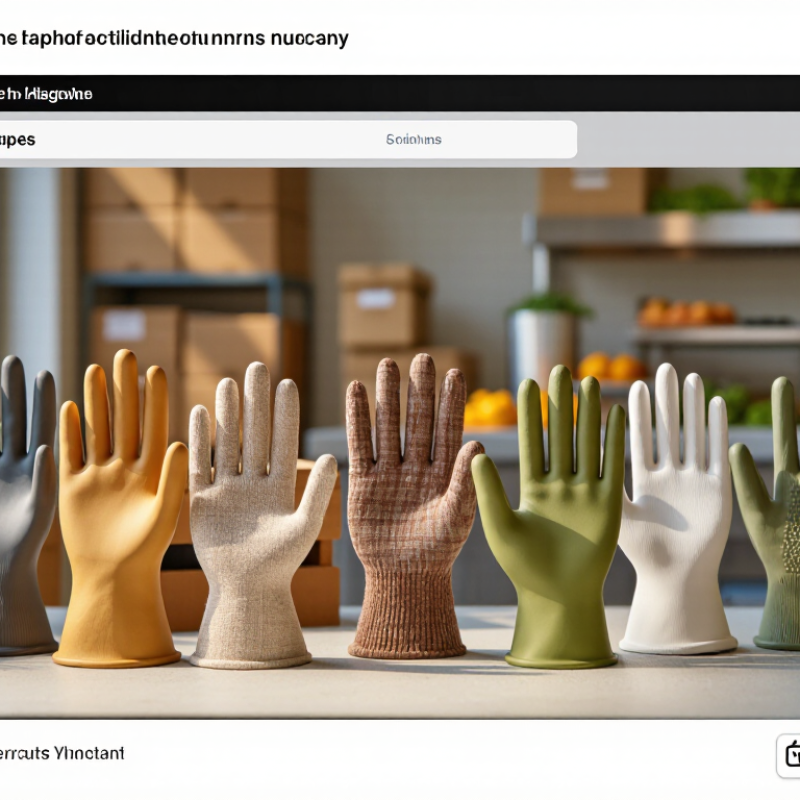
In 2026, glove makers are combining recycled and renewable materials to reduce reliance on virgin resources. Recycled polyester can use recovered plastic bottles, while recycled nylon may come from discarded textile or industrial waste. Both can provide durable outer fabrics, but their environmental value depends on sourcing, processing, and how long the gloves last.

Recycled content alone does not tell the whole story. Details matter. Buyers should request clear material breakdowns and supporting documentation rather than relying on broad “eco-friendly” claims.

Organic cotton is a renewable option for linings and light-duty gloves, where softness and breathability matter. Natural rubber and latex can provide flexible grip, though they are not suitable for every wearer. Bio-based fibers and plant-derived coatings are also appearing in glove materials, but their performance and end-of-life pathways vary.

A compostable ingredient does not make an entire glove compostable if its lining, coating, or seams are not. That distinction is easy to miss.

In real purchasing, abrasion resistance, fit, and wash life deserve equal attention: a glove that needs frequent replacement may offset some material savings. Compare verified composition with the task, not just the label.

Leading Eco-Friendly Glove Types for Different Applications

Eco-friendly gloves work best when material choice follows the task, not a sustainability label alone.

Warehouse teams can use reusable recycled-polyester gloves for breathable coverage while handling cartons and scanners. Check seam strength and grip after repeated washing; a glove that wears out quickly may create more waste.

Small details matter.

Gardeners may prefer washable organic-cotton gloves for dry pruning and potting, where airflow helps during long sessions. Add a coated palm only when wet grip is needed, since coatings can complicate recycling.

For light assembly, recycled-nylon blends can preserve dexterity around small parts. Confirm abrasion performance in real work conditions. Cut-resistant reusable gloves may suit rough-material handling; recycled content alone does not prove protection.

Natural-rubber gloves fit some gardening and cleaning tasks, but latex sensitivity and chemical exposure need assessment. Disposable bio-based or compostable gloves are narrower choices. Use them only when documented performance matches the task and a local composting route accepts them. That route is often missing. Compare service life, laundering needs, and end-of-life options—not just package claims.

Comparing Performance, Certifications, and End-of-Life Options

For global buyers, an “eco-friendly” glove still needs to protect hands reliably. Compare cut, abrasion, grip, and chemical resistance against the actual task, using relevant performance tests such as EN 388 or EN ISO 374. A thin recycled-content glove may suit light assembly but fail around sharp edges. Fit matters. Poor fit can shorten service life and increase replacement rates, weakening environmental gains.

Check what each certificate covers. ISO 14001 addresses an organisation’s environmental management system; it does not certify a glove as sustainable. Ask for product-level evidence, including material traceability, recycled-content verification, and clear test conditions for biodegradability claims. End-of-life options depend on construction and use: mixed liners and coatings can complicate recycling, while workplace contamination may rule it out. Not automatic. The OECD’s Global Plastics Outlook estimated that only 9% of plastic waste was ultimately recycled in 2019. That figure is not glove-specific, but it highlights why disposal claims need scrutiny. Request written guidance on collection, sorting, and processing in the destination market; a compostable label alone does not prove the glove will break down in local conditions.

2026 Top Eco Friendly Gloves for Global Buyers - Comparing Performance, Certifications, and End-of-Life Options

Glove type and typical construction Performance profile Environmental considerations Relevant standards or verification End-of-life options Buyer checks
Reusable cotton or other natural-fibre knit
Uncoated, or with a partial grip coating
Breathable and comfortable for light handling. Uncoated versions generally provide limited cut, puncture, liquid, and chemical protection; grip and abrasion resistance depend on the coating and construction. Can use renewable fibres, but farming, dyeing, finishing, coatings, and transport also affect impact. “Natural fibre” alone does not establish an overall environmental benefit. For protective claims, check the applicable EN ISO 21420 requirements and, where relevant, EN 388 test results. Textile chemical testing may be documented for the specific finished item. Clean, uncoated textile may be suitable for a local textile-reuse or recycling route where available. Coatings, contamination, and mixed fibres can limit recycling; disposal rules vary locally. Confirm fibre composition, coating content, wash durability, abrasion or cut test results, and whether a local collection route accepts the glove.
Recycled-fibre knit with a polymer grip coating
Commonly polyester or nylon yarn with a coated palm
Often suited to general assembly and handling. Grip, dexterity, abrasion, and cut performance vary with yarn, liner gauge, coating material, and design. Verified recycled content can reduce use of virgin feedstock. A coating and mixed-material construction may make the finished glove difficult to recycle. GRS or RCS documentation can verify recycled-material claims and chain of custody within their scope. These do not certify protective performance or prove that a glove is recyclable. Reuse is generally preferable while the glove remains safe and serviceable. Material recycling depends on local facilities and the ability to separate or process the coating and liner. Request the recycled-content claim and supporting scope for the finished product; separately check relevant EN 388 results and coating composition.
Reusable natural-rubber-latex-coated textile
Textile liner with a natural rubber palm or full coating
Can provide useful grip and flexibility for selected wet or general-handling tasks. Performance is construction-specific; it is not automatically suitable for oils, solvents, or other chemicals. Natural rubber is a renewable feedstock, but harvesting, processing, vulcanisation, additives, and the textile liner affect the product’s footprint. Renewable content does not mean the finished glove will rapidly biodegrade. Check EN 388 results for mechanical hazards and chemical test data where relevant. Natural rubber latex can cause allergic reactions in some users; review workplace allergy controls. Reuse when safe and hygienic. Do not assume a coated or vulcanised glove is home-compostable; mixed materials, additives, and contamination affect disposal. Check latex-allergen information, coating coverage, task-specific test results, laundering instructions, and whether the supplier makes a substantiated end-of-life claim.
Reusable leather work glove
Leather, sometimes combined with a textile lining or cuff
May provide durability and abrasion or heat protection in tasks for which the particular design has been tested. Dexterity, water resistance, and protection vary by leather, construction, and treatment. Leather is a by-product of animal agriculture, but its impacts depend on sourcing, tanning, finishing, and transport. Tanning and coatings can affect chemical and wastewater impacts. Check the glove’s applicable EN ISO 21420, EN 388, or EN 407 test results for the intended hazard. Verify material and chemical claims for the specific item. Extend service life through suitable care where permitted. Mixed materials, treatments, and contamination can restrict recycling; disposal options depend on local rules. Review leather source, tanning and chemical disclosures, heat or mechanical test results, care instructions, and the product’s replacement criteria.
Single-use natural-rubber-latex glove
Thin disposable glove
Flexible and tactile for suitable tasks. Chemical and biological barrier performance depends on thickness, formulation, testing, and intended use; latex allergy is an important consideration. Uses renewable natural rubber, but remains a single-use product in many applications. Renewable raw material does not by itself establish compostability or a lower total impact. For medical or food-contact uses, verify the regulations and test requirements applicable in the destination market and intended use. EN ISO 374 applies only where relevant protection claims are tested. Used gloves may be contaminated and may not be accepted by recycling or composting services. Follow workplace infection-control, chemical-safety, and local waste rules. Check intended-use approvals, sizing, allergen information, pinhole or barrier testing, and disposal guidance for the actual waste stream.
Single-use nitrile glove
Disposable synthetic-rubber glove
Commonly selected for disposable barrier applications. Protection differs by formulation, thickness, exposure time, and chemical; no generic glove is suitable for every chemical. Nitrile is generally made from synthetic rubber feedstocks. A claim of recycled or bio-based content should be verified for the specific glove and should not be confused with biodegradability. For chemical protection, request relevant EN ISO 374 permeation and degradation data for the chemicals and exposure conditions. Check destination-market requirements for medical or food-contact use. Used gloves are often unsuitable for recycling because of contamination and material limitations. Do not treat landfill breakdown or “biodegradable” marketing as proof of safe compostability. Check chemical-specific breakthrough data, thickness, intended-use compliance, and evidence behind any recycled-content, bio-based, or end-of-life claim.

Buyer note: This is a category-level comparison, not a ranking or product test. Performance and environmental attributes vary by model and intended use. EN ISO 21420 covers general requirements for protective gloves; EN 388, EN ISO 374, and EN 407 address specific protection claims when applicable. Certification or recycled-content documentation does not, by itself, prove biodegradability, compostability, or recyclability. Ask for current product-specific test reports, certificates, material disclosures, and destination-market compliance before purchase.

Global Sourcing Factors for Buyers in 2026

For global buyers in 2026, eco-friendly gloves require more than a recycled-content claim. Compare fiber or polymer composition, coating materials, durability, and packaging. Textile Exchange’s Materials Market Report 2024 estimates global fiber production reached 124 million tonnes in 2023, with growth projected to continue. That scale makes material traceability important: ask suppliers for composition records tied to production lots, not just a general sustainability statement. Details matter.

Factory conditions deserve equal attention. Request evidence of water and chemical management, plus current test reports for abrasion, grip, and seam strength. Test samples after washing or repeated use; a glove that wears out quickly may create more replacement waste. OECD’s Global Plastics Outlook reports that only 9% of plastic waste was recycled in 2019. This is not a glove-specific figure, but it is a useful reminder to check what “recyclable” means in the buyer’s actual disposal setting. I would not call a glove sustainable on fiber content alone. Supplier answers can be incomplete, too, so document gaps and revisit them before placing repeat orders.