Leave Your Message

Top Drawstring Garbage Bags for Bulk Buyers

Bulk buyers do not choose garbage bags by roll price alone. A low-cost case can become expensive when liners split, drawstrings loosen, or sizes fail to fit standard bins. For facilities with kitchens, offices, retail floors, or shared workspaces, small weaknesses repeat across hundreds of daily cleanups. That adds up.

The U.S. Environmental Protection Agency’s 2018 Advancing Sustainable Materials Management report estimated that Americans generated 292.4 million tons of municipal solid waste, or about 4.9 pounds per person per day. This figure describes a broad waste stream, not demand for any single bag type. Still, it shows why dependable collection supplies matter in everyday operations. Drawstring Grabage Bags can help staff close and carry full liners with less direct contact, provided the drawstring and seams hold under realistic loads.

This guide examines what bulk purchasers should compare: bag dimensions, thickness, resin type, drawstring construction, case quantity, and cost per usable bag. A 30-gallon liner may look right on a specification sheet, yet sag badly in a deep can. Test fit matters. So does testing with wet food scraps, paper, or light packaging before placing a large order. There is no perfect bag for every site. Buyers should match performance to waste type and pickup routine, then review supplier specifications and sample quality. The cheapest option may still be the wrong one.
Top Drawstring Garbage Bags for Bulk Buyers

What Defines a High-Quality Drawstring Garbage Bag

What Defines a High-Quality Drawstring Garbage Bag

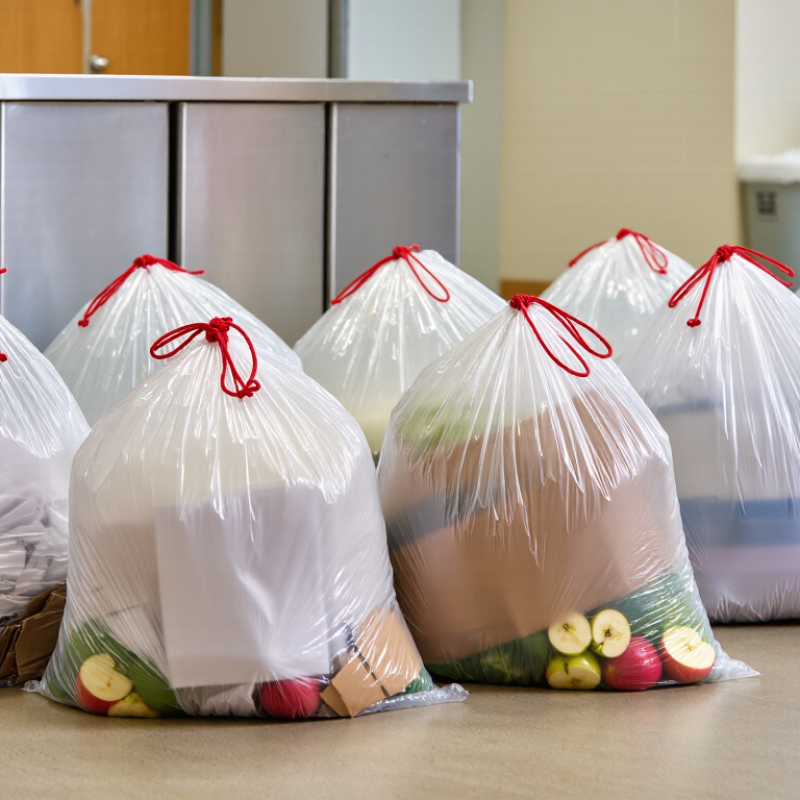
A dependable drawstring bag should lift cleanly, resist punctures, and close without the cord pulling free. For bulk buyers, check film thickness, bag dimensions, resin type, and seal strength—not just the “heavy-duty” label. Ask suppliers for test results using ASTM D882 for tensile properties and ASTM D1922 for tear resistance. These methods make samples easier to compare, though they do not guarantee performance in every bin. Try bags with real loads: damp kitchen waste behaves differently from dry paper. Small detail, big difference.

Environmental context matters, too. The U.S. Environmental Protection Agency reported that Americans generated 292.4 million tons of municipal solid waste in 2018, with plastics making up 12.2 percent by weight. That figure covers many products, not garbage bags alone, but it underlines why material efficiency deserves attention. A thinner bag is not automatically better if it splits and requires double-bagging. Nor is thicker film always the smarter choice. Compare failure rates, usable capacity, and material per bag across a representative trial. One imperfect point: sample testing takes time, and results can vary with handling. Still, documented specifications and consistent production checks give purchasing teams stronger evidence than appearance alone.

Top Drawstring Garbage Bags for Bulk Buyers - What Defines a High-Quality Drawstring Garbage Bag

Representative product specifications for common bulk-buying applications. Actual capacity, dimensions, thickness, and pack counts vary by manufacturer; confirm measurements and test samples before ordering.

Bag profile Typical dimensions Approx. capacity Typical thickness Common pack format Suitable use Quality checks for buyers
Small office Approx. 17 × 18 in (43 × 46 cm) 4 gal (15 L) Around 6–10 µm Typically 50–100 bags per roll Desk-side bins and light, dry waste Check fit around the rim, clean perforations, and a drawstring that closes without tearing.
Kitchen / medium Approx. 24 × 27 in (61 × 69 cm) 13 gal (49 L) Around 10–15 µm Typically 20–50 bags per roll Household kitchens and break rooms Check usable width and length, seam consistency, and resistance to leaks from ordinary kitchen waste.
Large room / facility Approx. 30 × 36 in (76 × 91 cm) 30 gal (114 L) Around 15–25 µm Typically 10–25 bags per roll Classrooms, offices, and shared indoor bins Assess load performance, puncture resistance, and whether the closed bag can be lifted comfortably.
Heavy-duty large Approx. 33 × 39 in (84 × 99 cm) 39 gal (148 L) Around 20–30 µm Typically 10–20 bags per roll Larger indoor containers and routine facility waste Test seams and puncture resistance using the waste type and handling conditions expected at the site.
Extra-large contractor Approx. 38 × 58 in (97 × 147 cm) 55 gal (208 L) Around 25–40 µm Typically 5–15 bags per roll Large cans and bulky, non-sharp waste Confirm container fit, listed thickness, drawstring attachment, and the recommended load for the application.

Bulk-buying note: Compare bags using the same measurement method and application. Thickness alone does not establish strength; resin type, film quality, bag construction, seams, and intended load all matter. Ask suppliers for sample rolls, dimensional tolerances, pack-count verification, and written specifications.

Key Materials, Sizes, Capacities, and Thickness Options

Top Drawstring Garbage Bags for Bulk Buyers

Material choice sets the bag’s working limits. Low-density polyethylene (LDPE) stretches around irregular waste, while high-density polyethylene (HDPE) suits lighter, uniform loads. For wet food scraps or sharp packaging edges, test samples under real conditions; resin labels alone cannot predict puncture performance. The US Environmental Protection Agency reported 35.7 million tons of plastic waste in municipal solid waste in 2018, or 12.2% of the total. That figure makes waste reduction worth considering alongside unit price. Source: EPA, Advancing Sustainable Materials Management: 2018 Fact Sheet.

Size and capacity should match the container, not just the listed gallon rating. Measure the bin opening and depth, then allow enough overhang for a secure drawstring closure. A 30-gallon bag may fit a 30-gallon can poorly if its dimensions are narrow. Thickness matters, too: compare mil or micron specifications, and request samples when switching suppliers. Thicker film can improve strength, but it may add cost and material without helping light office waste.

How to Compare Bags for Commercial and Industrial Use

For bulk buyers, comparing drawstring garbage bags means looking beyond price per case. Start with the waste stream: paper scraps, food packaging, or heavy workshop debris all place different demands on a bag. Check the stated capacity and dimensions, then compare them with the actual bins on site. A bag that fits a 55-gallon container on paper may sit too low or slip off its rim. Small details matter.

Film thickness can indicate strength, but it is not a complete performance test. Resin, seam construction, and bag dimensions also affect tear resistance and load handling. Ask suppliers for consistent specifications and sample bags. Test them with the waste your staff actually handles, including sharp-edged packaging if that is part of normal operations. One trial is useful, though it may not reflect every shift or season. Track leaks, tears, and drawstring failures before committing to a large order. A low unit price can cost more when bags fail during collection.

Tips: Compare cost per usable bag, not just cost per case. Check drawstring grip with gloved hands, and confirm the closure stays secure when the bag is lifted. Keep a few samples near the relevant bins for staff feedback. Their comments may be imperfect, but they can reveal fit or handling problems that a specification sheet misses.

Bulk Purchasing Factors: Pricing, Packaging, and Supply Reliability

Bulk buyers should compare drawstring garbage bags by usable cost, not carton price alone. A low quote can hide thin film, loose seals, or fewer bags per case. Ask for the price per bag and the gauge or stated thickness. Then test samples with the waste your site actually produces. A bag holding dry paper may fail under damp food scraps. Small difference, big mess. Track failures during a short trial, including split seams and drawstrings that pull free.

Packaging affects storage and daily handling. Check bags per roll, rolls per carton, and carton dimensions before ordering. Compact cartons can save shelf space, but tightly wound rolls may be harder to separate with gloves. Confirm whether case counts remain consistent across repeat orders. Supply reliability deserves the same scrutiny as price. Request realistic lead times, minimum order quantities, and notice procedures for delays. Keep a modest buffer based on actual use, not guesswork; excess stock ties up space and cash. One detail buyers sometimes overlook: ask how product changes are communicated. A small change in bag size or film feel can disrupt routine. Specifications should be written down, though they may still need periodic review.

Top Drawstring Garbage Bags for Bulk Buyers

Illustrative pricing scenario for 33-gallon drawstring bags. Larger orders may reduce the estimated cost per 100 bags; actual prices, packaging, and lead times vary by supplier and product specifications.

Compare quoted price alongside pack size, minimum order quantity, and confirmed delivery schedule before purchasing.

Storage, Handling, and Waste Disposal Best Practices

Top Drawstring Garbage Bags for Bulk Buyers

Bulk purchasing works only when storage and handling stay controlled. Keep cartons off damp floors, away from heaters, and out of direct sunlight. A cool, dry, clearly labeled area helps prevent damaged packaging and confusing bag sizes during busy shifts. Store frequently used cartons near collection points, but keep walkways clear. Drawstrings make closing and lifting easier, yet they do not make an overloaded bag safe to carry.

The U.S. Environmental Protection Agency reported that Americans generated 292.4 million tons of municipal solid waste in 2018, or about 4.9 pounds per person per day. That scale makes consistent waste sorting important.

Match bag capacity to the bin and waste type; avoid filling bags until they strain or become difficult to lift. Tie the drawstrings securely, check for leaks, and follow site procedures for separating recyclables from general waste. Small routines matter. We still get this wrong when staff rush.

Tips: Rotate stock using the oldest cartons first, and inspect packaging during receiving. Keep a simple log of bag size, use, and breakage; a few weeks of records can reveal poor fit or overfilling. Dispose of contents through the facility’s approved waste stream. EPA figures describe national waste generation, not the needs of every workplace, so adjust purchasing to actual site volumes.