Leave Your Message
Choosing the right China-based supplier is not simply a matter of comparing prices. For global buyers, PE Plastic Wrap must perform reliably during production, transport, storage, and daily use. Film gauge, tensile strength, cling, transparency, puncture resistance, and roll consistency all deserve careful review. A weak film can tear around a pallet corner. An uneven roll can slow an entire packing line.
Dr. Susan Selke, a respected packaging researcher and author, has stated, “Packaging must protect the product before it can protect the environment.” This principle remains highly practical for PE Plastic Wrap procurement. A responsible supplier should provide clear technical data, batch traceability, quality inspection records, and suitable food-contact documentation when required. Buyers should also examine resin selection, including LDPE and LLDPE blends, rather than accepting vague claims about “premium quality.” Small details matter.
A dependable Chinese manufacturer should welcome sample testing. Ask for rolls from different production batches. Test stretch, cling, sealing behavior, and performance in cold or humid conditions. Factory experience helps, but it is not enough. Systems matter more.
There is room for improvement.
Some suppliers still describe sustainability too broadly. Recyclability claims need evidence, not attractive wording. Recycled content, downgauging, and efficient packaging can reduce material use, but each choice may affect strength or handling. The best supplier is therefore not always the cheapest one. It is the partner that combines stable PE Plastic Wrap quality, transparent communication, documented compliance, and realistic technical support for global buyers.
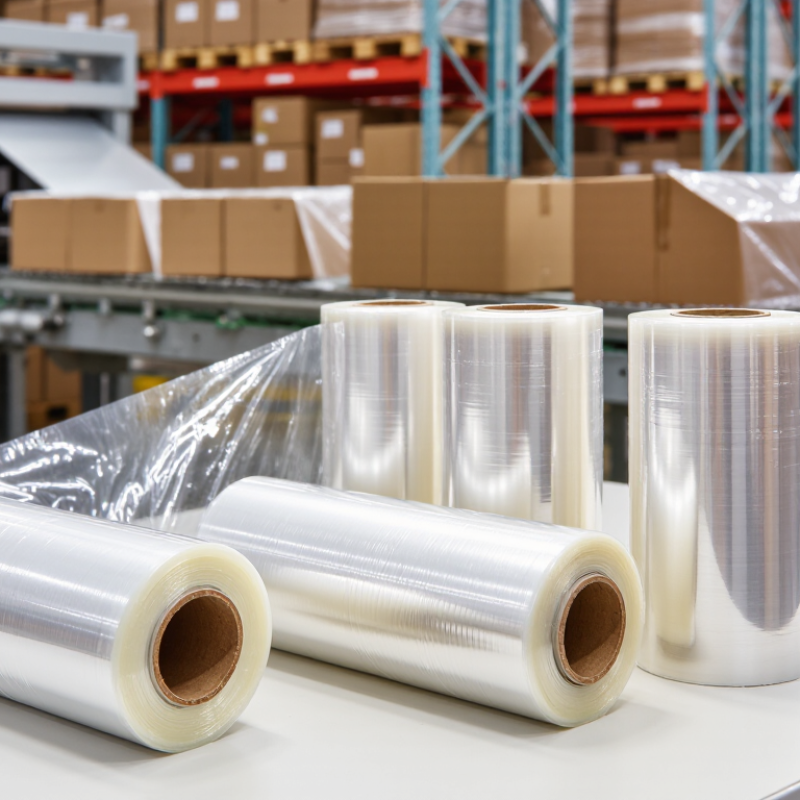
PE plastic wrap is a thin film made from polyethylene, a flexible polymer used for covering, bundling, and protecting products. Depending on its formulation, it may offer strong cling, clear visibility, moisture resistance, or better puncture protection. Food processors use it for covering trays, while warehouses apply stretch wrap around cartons and pallets. The film is light, so it adds limited shipping weight.
Global buyers choose PE wrap because it works across many supply chains. A warehouse can secure uneven cartons quickly. A retailer can see the packaged goods without opening them. Moisture resistance also helps during short transport and storage periods. However, performance depends on thickness, stretching force, sealing behavior, and the condition of the packaging line. Thicker film is not always better. Sometimes, it only increases material use.
Reliable purchasing requires more than comparing prices. Buyers should request clear specifications, sample rolls, and test results for tensile strength, elongation, and puncture resistance. For food-related use, they should verify suitable food-contact documentation for the destination market. Local recycling systems also deserve attention, because recyclable PE film may not be collected everywhere. A cheaper roll can create more waste if it tears during wrapping. That point is easy to miss. Careful trials often reveal the real cost, especially when pallets face vibration, temperature changes, or long-distance handling.
| Data Dimension | Typical PE Plastic Wrap Information | Why It Matters to Global Buyers | Common Purchasing Considerations |
|---|---|---|---|
| Material Definition | PE plastic wrap is a flexible film made primarily from polyethylene, a thermoplastic polymer commonly processed into thin rolls or sheets. | It offers a lightweight barrier for protecting products during storage, handling, and transportation. | Confirm the polyethylene type, film structure, intended application, and required documentation. |
| Main PE Types | Low-density polyethylene (LDPE) is generally soft and flexible; linear low-density polyethylene (LLDPE) commonly provides improved stretch and puncture resistance; high-density polyethylene (HDPE) is stiffer and less suitable for highly stretchable wrap. | Different resin types affect stretchability, stiffness, strength, transparency, and sealing performance. | Select the resin combination according to load weight, wrapping method, temperature, and packaging line speed. |
| Typical Thickness | Commercial PE films are often produced in approximately 10–200 micrometres (µm), depending on the application. Food and pallet films commonly use different thickness ranges. | Thickness influences protection, material consumption, cost, and film performance. | Specify thickness tolerance and test method rather than relying only on a nominal value. |
| Density | LDPE is typically about 0.910–0.940 g/cm³, while HDPE is commonly about 0.941–0.965 g/cm³. Exact values depend on the grade and formulation. | Density affects stiffness, yield, weight, and conversion behavior. | Use the supplier’s technical data sheet for the exact grade and production specification. |
| Appearance | PE wrap can be transparent, translucent, colored, printed, or opaque. Transparency depends on resin, thickness, additives, and processing conditions. | Clear film supports product visibility and barcode scanning, while colored or opaque film can improve identification and light protection. | Define color, haze, gloss, printability, and required visual uniformity. |
| Stretchability | Stretch performance varies by formulation and production method. LLDPE-based stretch film is widely used where elongation and load containment are required. | Stretchable film can secure cartons or pallet loads while reducing the amount of film needed per wrapped unit. | Request elongation, force-at-break, and load-retention data under agreed test conditions. |
| Tensile and Puncture Performance | PE film can provide good flexibility and impact resistance, but performance depends on thickness, resin grade, orientation, and additives. | Higher resistance helps prevent tears and punctures caused by sharp corners, vibration, or rough handling. | Evaluate tensile strength, tear resistance, puncture resistance, and dart impact where relevant. |
| Moisture Barrier | Polyethylene has low water absorption and generally provides a useful moisture barrier for many packaging applications. | It helps protect goods from humidity, splashes, dust, and surface contamination during transportation. | For demanding moisture or vapor-barrier requirements, verify the complete film structure and water-vapor transmission data. |
| Temperature Range | PE film remains flexible at many ordinary storage and transport temperatures, but its performance changes with temperature. It can soften under elevated heat and become less flexible in severe cold. | Temperature affects wrapping tension, sealing, storage stability, and handling performance. | Provide the expected service, storage, and transport temperature range before selecting the film. |
| Common Applications | Pallet wrapping, carton bundling, food and household overwrap, agricultural covering, surface protection, industrial packaging, and general-purpose bag or liner production. | The broad application range makes PE wrap suitable for retail, manufacturing, logistics, agriculture, and export packaging. | Match the film’s grade and additive package to the product-contact, outdoor, industrial, or logistics application. |
| Food-Contact Use | Some PE films are manufactured for food-contact applications, but not every PE film is suitable for direct food contact. | Food packaging requires controlled raw materials, manufacturing practices, and regulatory compliance. | Request food-contact declarations and applicable test reports for the destination market before purchase. |
| Surface Treatment and Additives | Films may include additives such as slip, antiblock, UV stabilizers, or tackifiers. Surface treatment may be used to improve printing or adhesion. | Additives influence film handling, cling, outdoor durability, print quality, and machine performance. | Confirm additive type, intended function, migration requirements, and compatibility with the packaging process. |
| Roll and Sheet Formats | PE wrap is supplied as machine rolls, hand rolls, jumbo rolls, bags, liners, or cut sheets. Core diameter, roll width, and winding direction can vary. | Correct roll dimensions help prevent machine downtime and improve warehouse handling efficiency. | Specify film width, length, net weight, core size, roll outer diameter, winding direction, and packing method. |
| Printing Capability | PE film can be printed using suitable surface treatment and inks, although print adhesion depends on the resin and film surface. | Printed film can communicate handling instructions, product information, recycling messages, or logistics markings. | Confirm artwork format, number of colors, print repeat length, ink requirements, and proofing process. |
| Recyclability | Many PE films are technically recyclable where suitable collection and recycling systems exist. Recycling outcomes depend on film type, contamination, additives, and local infrastructure. | Recyclable packaging can support waste-reduction objectives and customer sustainability requirements. | Check local recycling guidance, material identification, recycled-content requirements, and available end-of-life routes. |
| Quality-Control Items | Common checks include thickness, width, length or net weight, tensile strength, elongation, tear resistance, puncture resistance, appearance, and roll dimensions. | Consistent inspection reduces complaints, production interruptions, and variation between shipments. | Agree on sampling plans, tolerances, inspection standards, and pre-shipment verification procedures. |
| Export Packaging | Typical export protection includes individual roll wrapping, moisture-resistant outer packaging, palletization, corner protection, and clear shipping marks. | Appropriate packaging helps reduce deformation, contamination, and moisture damage during international transport. | Define pallet size, maximum load, container utilization, labeling language, and documentation requirements. |
| Buyer Specification Checklist | Key specifications include application, PE type, thickness, width, roll length or weight, color, transparency, cling, stretch, core size, packaging, destination market, and compliance needs. | A complete specification improves quotation accuracy and makes supplier comparisons more reliable. | Use a written technical specification and approve a production sample before placing a large order. |
Note: Values and performance ranges are typical industry references rather than universal specifications. Actual properties depend on resin grade, film structure, additives, processing conditions, and the intended application.