How to Choose the Best Disposable Aprons for Your Needs?
Choosing the best disposable aprons can be daunting. With various materials, sizes, and designs available, it’s essential to find the right fit for your needs. “The correct disposable apron can make all the difference in keeping your team comfortable and protected,” says industry expert Sarah Jennings. Her insight highlights the importance of choosing wisely.
Disposable aprons are fundamental in many industries. From food service to healthcare, they provide essential protection. Selecting the right type can enhance safety and efficiency. However, many people overlook the specific requirements for their tasks. The consequences of a poor choice can lead to spills and contamination.
Evaluating your needs is crucial. Think about the material, length, and intended use of the aprons. For instance, some materials resist grease better than others. Not every apron meets every requirement. Reflect on what works best for you. As Sarah points out, understanding the details can elevate your choice of disposable aprons.

Understanding Different Types of Disposable Aprons Available in the Market
Choosing the right disposable apron can be tricky. There are several types available. Each type serves different needs, so understanding them is essential.
Plastic aprons are common in various settings. They offer waterproof protection. However, they may not be breathable. That can be uncomfortable during long tasks. Consider how you'll use them. A thin plastic apron might tear easily, which could lead to messes.
Then, there are polypropylene aprons. These are more durable and often lightweight. They resist tearing better than plastic. But, some still find them less comfortable. You might sweat more in these. Think about the balance between durability and comfort for your specific tasks. Testing a few options can help find what works best for you. Keep in mind the type of activities you’ll engage in when choosing.
Key Features to Consider When Choosing Disposable Aprons
When choosing disposable aprons, several key features are essential. Durability is a major factor. Some aprons tear easily, leading to messy situations. Look for strong materials that can withstand demanding tasks. Consider waterproof or spill-resistant options. These provide extra protection, especially in kitchen or medical settings.
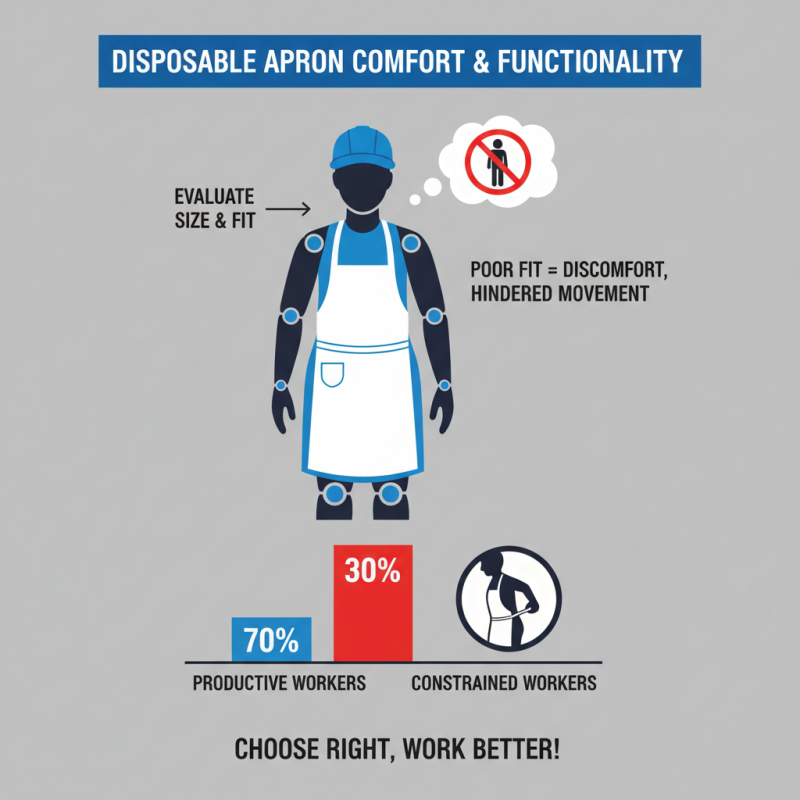
Another crucial aspect is the size and fit. Some aprons are one-size-fits-all, while others come in various sizes. A well-fitting apron can enhance comfort and efficiency. Measure your needs before purchasing. A tight apron can restrict movement, while a loose one may not provide adequate coverage.
**Tip:** Always check the thickness of the material. Thicker aprons may offer greater protection but could be less comfortable in hot environments.
Consider the design. Some aprons feature pockets for tools or utensils. This adds convenience, particularly in work settings. However, others may have designs that aren’t practical for your tasks.
**Tip:** Test different designs when possible. Sometimes, what looks good on paper doesn’t function well in reality.
Assessing the Suitable Material for Your Specific Use Case
Choosing the right material for disposable aprons is crucial. Different settings demand varied materials. For food service, you might prefer lightweight polyethylene. It's waterproof and prevents stains effectively. However, it can tear easily. Consider the risk of punctures when handling sharp objects.
In a medical environment, a thicker option like polypropylene is often better. This material provides extra protection from bodily fluids. It’s durable but may feel heavier. Think about comfort and mobility. Do you or your staff need to move swiftly? If so, the weight of the apron matters.
Assessing the right material means weighing pros and cons. Sometimes, a cheaper option may lead to more spills or accidents. Reflect on your specific needs. Are you prioritizing protection or cost? Your choice of material affects overall efficiency and safety. Consider what that means for your situation.
Choosing the Best Disposable Aprons: Material Comparison
Budgeting for Disposable Aprons: Cost vs. Quality Considerations
When budgeting for disposable aprons, it’s crucial to weigh cost against quality. Cheaper options may seem tempting. However, they can compromise safety and comfort. Thin materials may tear easily, leaving you exposed. This can lead to spills and mess. So, consider the long-term impact of your purchase.
Think about the purpose of the aprons. If you're using them for a messy job, quality matters. A durable apron can save you money over time. You might pay a bit more upfront, but fewer replacements are needed. Additionally, if you work in a setting with high hygiene standards, investing in quality aprons is essential. Cheap options may not meet safety regulations.
Reflect on your own needs. It’s easy to overlook details in a rush. Are they comfortable for long hours? Will they stay intact during use? Asking these questions can lead to better choices. Finding a balance between cost and durability is always a challenge. Prioritize wisely based on the specific context where you will use them.
How to Choose the Best Disposable Aprons for Your Needs? - Budgeting for Disposable Aprons: Cost vs. Quality Considerations
| Apron Type |
Material |
Cost per Piece |
Durability (Use Cases) |
Waterproof |
| Plastic |
Polyethylene |
$0.10 |
Light duty (Food prep) |
Yes |
| Gauze |
Non-woven fabric |
$0.30 |
Medium duty (Cooking and cleaning) |
No |
| Tyvek |
Polyethylene fibers |
$0.50 |
Heavy duty (Medical and industrial) |
Yes |
| PVC |
Polyvinyl Chloride |
$0.75 |
Extra heavy duty (Chemicals and harsh environments) |
Yes |