2026 How to Choose Biodegradable Plastic Bags for Sustainable Living?
In recent years, the demand for Biodegradable Plastic Bags has surged. Consumers are increasingly seeking sustainable alternatives to traditional plastic. According to a recent report by Allied Market Research, the global biodegradable plastics market is expected to reach $15.69 billion by 2027, growing at a CAGR of 17.5%. This rapid growth reflects a shift in consumer preferences toward eco-friendly products.
Yet, choosing the right biodegradable option can be challenging. Not all biodegradable plastic bags break down under the same conditions. For instance, some require industrial composting facilities, which may not be accessible in all areas. A composting facility may not break down certain bags effectively, leading to pollution. Therefore, understanding their material composition and certifications is crucial.
As more brands enter the market, distinguishing quality becomes essential. Labels like ASTM D6400 and EN 13432 indicate compliance with recognized standards. However, not all bags displaying such labels may perform as claimed. Consumers need to remain vigilant and informed. Emphasizing rigorous research ensures the effective use of biodegradable plastic bags in creating a sustainable future.
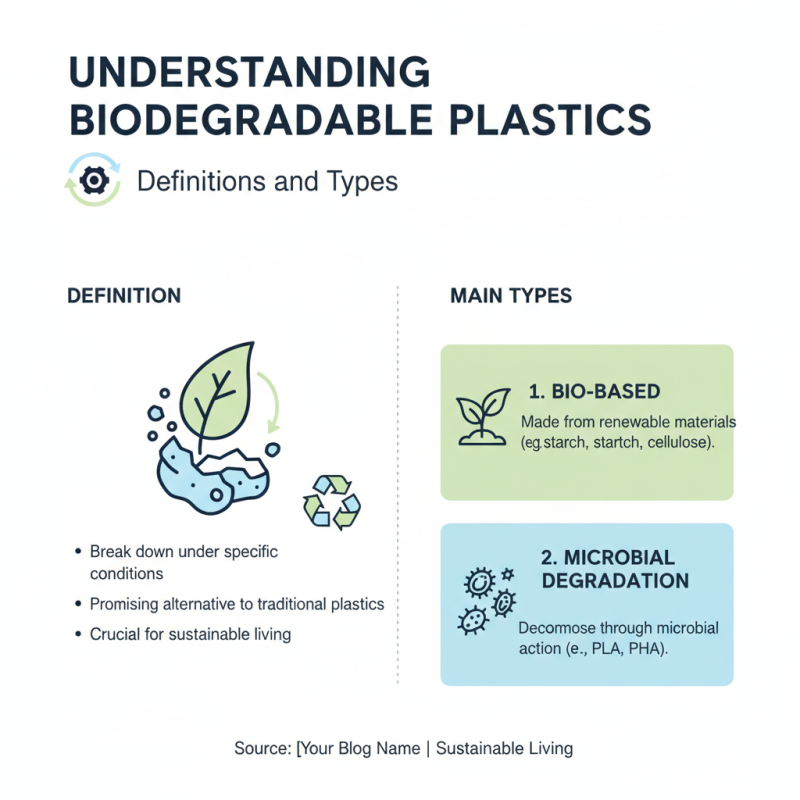
Understanding Biodegradable Plastics: Definitions and Types
Understanding biodegradable plastics is crucial for sustainable living. Biodegradable plastics are designed to break down under specific conditions. They provide a promising alternative to traditional plastics. There are two main types: those made from renewable materials and those that can decompose through microbial action.
Some biodegradable plastics are created from corn starch or sugarcane. These types are often used in packaging and disposable bags. They can be composted, which helps reduce landfill waste. On the other hand, biodegradable plastics made from petroleum can still be problematic. They may not break down fully, complicating waste management efforts. This raises questions about true sustainability.
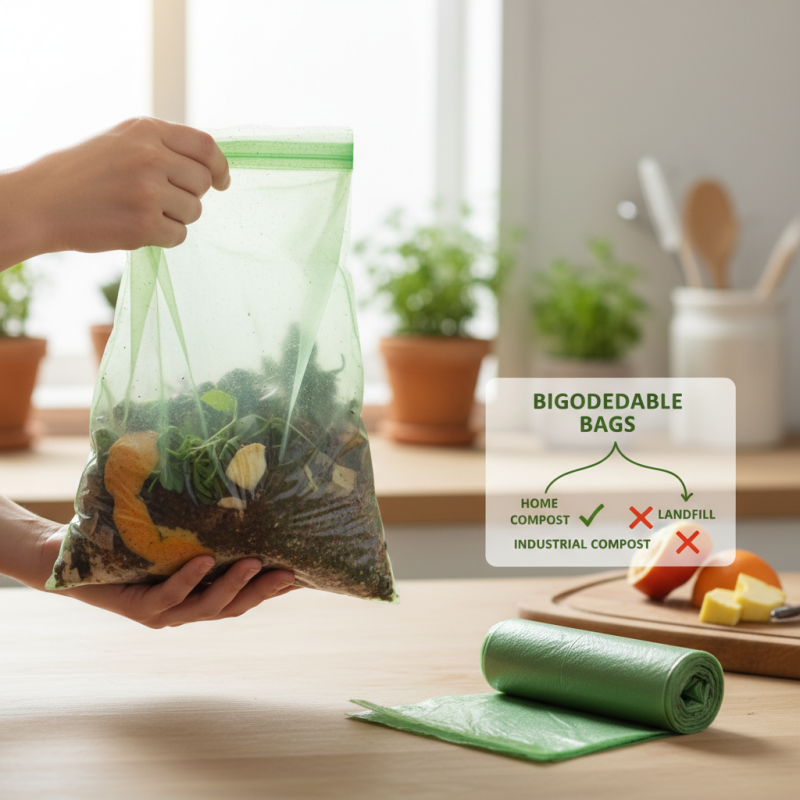
Choosing the right biodegradable bag involves understanding its composition. Not all biodegradable bags are compostable. Some require industrial facilities for proper degradation. Knowing local regulations about waste disposal is important. Without this knowledge, the effort may be wasted. Reflect on your choices. Every little action counts in this complex landscape.
Key Features to Look for in Biodegradable Plastic Bags
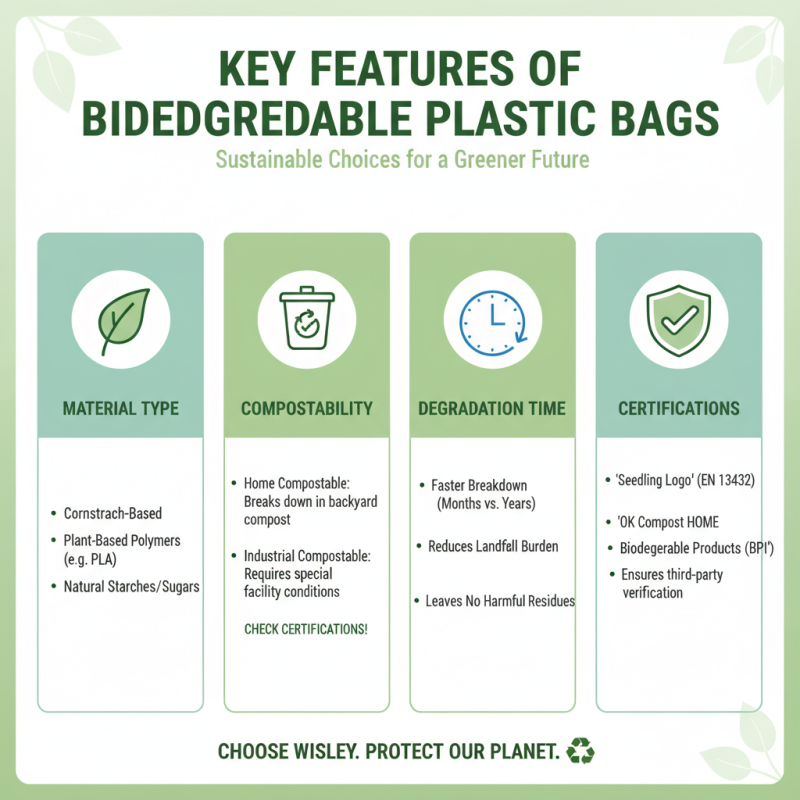
When choosing biodegradable plastic bags, look for specific features that ensure sustainability. The materials used in the bags matter. Common biodegradable options include cornstarch and other plant-based materials. These alternatives break down more easily than traditional plastics. However, not all biodegradable bags are created equal. Some may degrade only in industrial composting facilities and not in home compost.
Tips: Always check the certification of the bags. Look for labels indicating they meet composting standards. Biodegradable does not mean environmentally friendly in every case. Some additives may slow the breakdown process. Read the fine print to avoid these pitfalls.
Another key feature is the size and strength of the bags. Consider your needs when choosing dimensions. Smaller bags might be convenient for light waste, while larger ones are necessary for bulk items. Remember, usability is equally important. A bag must hold up under pressure. Fragile bags can lead to more waste, ultimately negating their benefits.
Tips: Think about your regular usage. If you often carry heavy items, invest in sturdy bags. Reflect on how you use bags. Are they more for groceries or trash? This helps you choose wisely.
Evaluating Environmental Impact: Certifications and Standards
When choosing biodegradable plastic bags, understanding certifications and standards is essential. Various labels can be confusing. Some claim to be "biodegradable" but lack rigorous testing. Others meet specific criteria, ensuring they disintegrate safely. Look for certifications like
ASTM D6400 and EN 13432, which set high standards for compostability.
These certifications indicate that the bags can break down in industrial composting facilities. However, not all biodegradable bags are created equal. Some may perform poorly in natural environments. This leads to questions about their actual environmental impact. It's crucial to evaluate where and how these bags will be disposed of. Not every biodegradable bag degrades in home composting setups.
Consider the production process as well. The materials used can influence sustainability. Derived from renewable resources, some bags might still create emissions during production. Encourage brands to be transparent about their practices. Reflect on your choices. Are you contributing to sustainable living? Understanding these aspects is vital for making informed decisions.
Practical Tips for Incorporating Biodegradable Bags into Daily Life
Incorporating biodegradable plastic bags into daily life can be quite simple. A recent study shows that about 30% of consumers are now choosing eco-friendly options. This shift is encouraging, but there’s still a long way to go. Many people remain unaware of how to properly dispose of these bags. It’s essential to educate ourselves on local composting practices. Many municipalities offer composting programs, but not all biodegradable bags are accepted.
When using biodegradable bags, consider specific usage scenarios. For instance, using these bags for grocery shopping helps reduce plastic waste. Yet, some biodegradable options can still take months to break down. Studies indicate that under certain conditions, they may not biodegrade fully in landfill settings. This highlights the need to read labels carefully and understand what “biodegradable” means in practice.
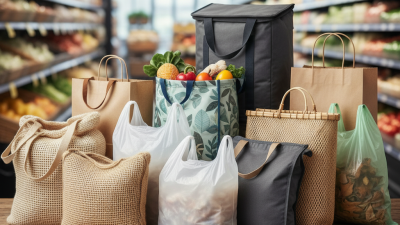
Moreover, keep alternatives in mind. While biodegradable bags are better than traditional plastics, reusable bags are even more sustainable. Balancing convenience with responsibility is crucial in our fast-paced lives. Reflecting on our consumption habits can lead to more conscious choices. Are we truly committed to sustainability, or merely participating in a trend? Every choice counts, and awareness can make a significant difference.
Comparative Analysis of Biodegradable Plastic Bags vs. Traditional Plastic Bags
Comparing Biodegradable Bags with Traditional Plastic Options
When considering sustainable options, it's important to look closely at biodegradable bags versus traditional plastic bags. Biodegradable bags break down more easily in the environment. They are made from natural materials, which can significantly reduce landfill waste. The process of decomposition can take months instead of hundreds of years. However, they still require specific conditions to decompose fully, which aren't always present.
On the other hand, traditional plastic bags are widely used but pose significant environmental risks. They can persist for decades in nature, harming wildlife and polluting ecosystems. While they are easily available and durable, their long-term impact raises serious concerns. Many people still choose them for convenience. The challenge lies in changing habits and educating consumers about the environmental cost.
Making a decision can be confusing. Biodegradable bags often cost more and might not perform as expected under all conditions. It's essential to consider your lifestyle and usage patterns. Are you willing to adapt to new options, or is convenience your priority? This reflection is necessary in our journey towards sustainable living.
2026 How to Choose Biodegradable Plastic Bags for Sustainable Living?
| Bag Type |
Material |
Biodegradability |
Compostability |
Durability |
Cost (per unit) |
| Biodegradable Plastic Bag |
PLA or Starch-based |
60-90 days |
Yes |
Moderate |
$0.20 |
| Compostable Bag |
PBAT and PLA |
90-180 days |
Yes |
High |
$0.35 |
| Traditional Plastic Bag |
Polyethylene |
500+ years |
No |
Very High |
$0.05 |
| Reusable Cloth Bag |
Cotton or Canvas |
N/A |
N/A |
Very High |
$1.50 |