Flat Black Garbage Bgas may look simple, but their performance depends on material, thickness, sealing, and intended use. A thin liner can suit office paper, while a reinforced contractor bag may handle broken cardboard, damp leaves, or heavier workshop waste. The difference is visible at the bottom seam. Weak seals split. Strong star seals stretch before failure.
Waste volumes make this choice more important. The U.S. Environmental Protection Agency reported 292.4 million tons of municipal solid waste generated in 2018, or about 4.9 pounds per person daily. Its National Overview of Solid Waste Management also shows that containers, packaging, and food waste remain significant waste streams. These figures do not tell buyers which bag to choose. They do show why capacity, puncture resistance, and secure closure matter.
Market research from Grand View Research identifies rising demand for durable and convenient garbage-bag formats, especially in commercial and household applications. However, market summaries often group very different products together. That can make comparisons confusing. A 30-gallon bag is not automatically stronger than a 20-gallon bag. Thickness, resin quality, recycled content, and manufacturing design require closer inspection.
This guide examines ten practical types of black flat bags. It compares common uses, construction features, load limits, and purchasing considerations. Some claims need caution. “Heavy duty” is not a universal performance grade. ASTM D6400 may help evaluate certain compostable plastics, but it does not certify every black garbage bag. Buyers should check verified specifications, test methods, and local waste rules before ordering large quantities. Small details matter. A few cents saved per bag may become costly after one messy failure.
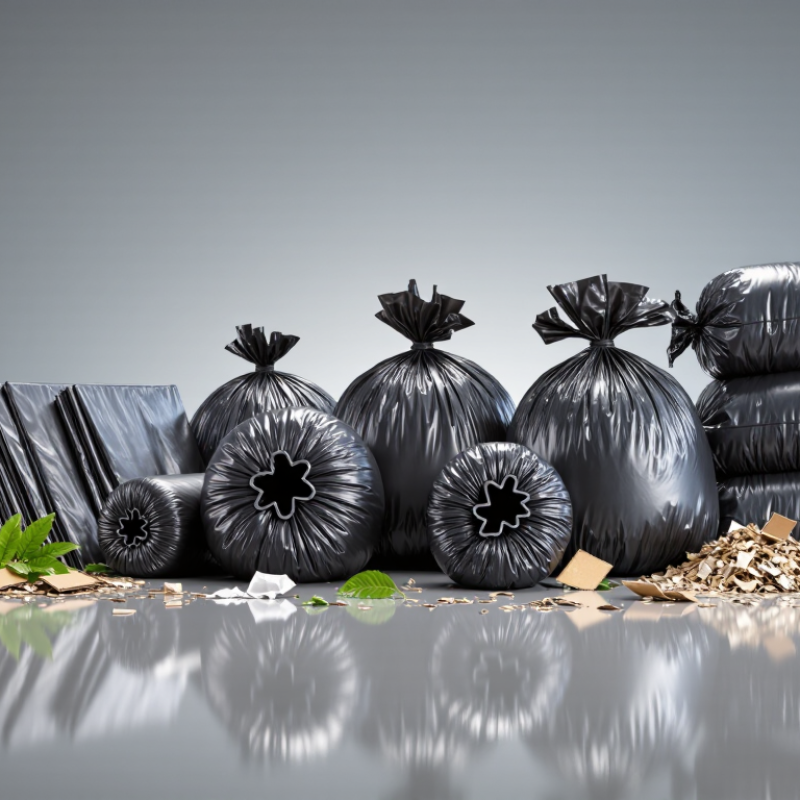
A flat black garbage bag is a simple, gusset-free liner with two broad layers sealed around the edges. Unlike a star-sealed bag, it has no folded bottom that expands into a square shape. It is flat by design. When opened, it forms a sleeve-like container, making its listed width and length important for fitting bins, boxes, and work areas.
The black color usually comes from carbon-based pigment, which improves opacity and hides ordinary waste from view. However, color does not prove strength. Thickness, resin quality, and sealing methods matter more. In practical use, a 1-mil bag may suit office paper, while a thicker 2- to 3-mil liner can handle damp kitchen waste or rough packaging. Those figures are only guidelines. Sharp edges can puncture even a heavy bag.
I have found that measuring the container rim first prevents many fitting problems. Leave enough height for folding the top over the edge and tying it without excessive strain. Flat bags often work well for narrow bins because they store compactly and open quickly. They can be less suitable for bulky waste that needs extra side expansion. A bag advertised as “heavy duty” still deserves testing with the actual load. That label can be misleading. Check the seal, stretch the material gently, and avoid overfilling when leakage would create a cleanup problem.
Flat black garbage bags are classified mainly by resin, thickness, recycled content, and intended load. Low-density polyethylene (LDPE) produces soft, flexible bags that fit irregular bins. Linear low-density polyethylene (LLDPE) adds stretch and puncture resistance, useful for food-service or workshop waste. High-density polyethylene (HDPE) creates thinner, crinklier bags with strong resistance to moisture and many chemicals. They may tear sharply under heavy, angular waste.
Recycled polyethylene is another important category. Post-consumer content can lower virgin plastic demand, but quality depends on sorting and processing. The OECD’s Global Plastics Outlook reported that only about 9% of plastic waste was recycled globally in 2019. That figure explains why “recycled” should never mean automatically stronger. Compostable bags use certified biopolymer blends, yet they require suitable industrial composting conditions. They are not interchangeable with ordinary polyethylene liners. Black pigment also complicates optical sorting, especially when carbon black blocks near-infrared scanners. Practical tests matter more than labels. A bag that feels thick may still split at the bottom. In my experience, matching resin, gauge, and waste weight gives a better result than choosing color alone. Some classifications remain imperfect, because suppliers may report material blends differently.
Flat black garbage bags are mainly classified by the polyethylene or compostable polymer used in their film. The chart compares representative material configurations by typical polymer density. Virgin and recycled polyethylene types are commonly used for general waste, while PLA/PBAT and starch-polyester blends are used when compostability is required. Density is a material reference and does not by itself determine bag strength, puncture resistance, or load capacity.
What are the top 10 types of flat black garbage bags? The best choice depends on waste weight, moisture, and handling conditions. Light-duty bags suit office paper, tissues, and dry bedroom waste. Standard-duty bags handle everyday kitchen rubbish with fewer sharp edges. Heavy-duty bags work better for cans, food scraps, and damp cleaning materials. Extra-heavy bags provide stronger protection for renovation debris, broken packaging, and rough outdoor waste. Thickness matters, but a thicker bag is not always the most practical option.
Recycled-content bags reduce reliance on newly produced plastic, although their strength varies by manufacturer. Compostable black bags can suit approved organic-waste systems, but local facility rules must be checked carefully. Drawstring flat bags offer quicker closure and cleaner carrying. Tie-handle bags are useful when workers need fast, repeated disposal. Star-sealed bags spread pressure across the bottom and reduce corner stress. Square-sealed bags create a flatter base and can stand neatly inside suitable bins.
Perforated roll bags save storage space and support faster replacement during busy cleaning work. Odor-resistant bags may help with food waste, though they cannot replace timely disposal. My early mistake was choosing bag size by width alone; the filled height mattered more. A bag can look strong yet split when its corners press against a sharp object. Check the thickness, seal quality, capacity, and tested load rating before buying. The ranking is not absolute, because a small kitchen bin and a large outdoor container need very different performance.
| Type | Typical Capacity | Common Dimensions | Typical Thickness | Material | Best Use | Typical Load Level |
|---|---|---|---|---|---|---|
| 1. Light-Duty Flat Bags | 4–8 gal | 17 × 20–24 in | 0.35–0.50 mil | Low-density polyethylene | Small office bins, bedrooms, and bathrooms | Light, dry waste |
| 2. Standard Kitchen Flat Bags | 10–13 gal | 24 × 32–36 in | 0.60–0.90 mil | Polyethylene film | Kitchen and household wastebaskets | Moderate, mostly bagged waste |
| 3. Tall Commercial Flat Bags | 20–33 gal | 30 × 38–44 in | 0.70–1.00 mil | High-density or linear low-density polyethylene | Office, retail, and public-area receptacles | Moderate daily waste |
| 4. Heavy-Duty Flat Bags | 20–33 gal | 30 × 38–44 in | 1.00–1.50 mil | Linear low-density polyethylene | Dense refuse, food-service waste, and general cleanup | Heavy and moderately abrasive waste |
| 5. Contractor Flat Bags | 33–55 gal | 38 × 46–58 in | 2.00–3.00 mil | Reinforced linear low-density polyethylene | Renovation debris, landscaping, and job-site cleanup | Very heavy or sharp-edged waste |
| 6. Extra-Heavy Industrial Flat Bags | 33–60 gal | 38 × 48–60 in | 3.00–6.00 mil | Heavy-gauge linear low-density polyethylene | Industrial maintenance and bulky refuse | High-weight, puncture-prone waste |
| 7. High-Density Flat Bags | 10–33 gal | 24 × 32–44 in | 0.35–0.70 mil | High-density polyethylene | Paper, packaging, and lightweight dry waste | Light to moderate waste without sharp edges |
| 8. Leak-Resistant Flat Bags | 20–33 gal | 30 × 38–44 in | 1.00–1.50 mil | Linear low-density polyethylene | Wet household waste and food-service cleanup | Moderate to heavy wet waste |
| 9. Recycled-Content Flat Bags | 13–33 gal | 24 × 32–44 in | 0.70–1.50 mil | Post-consumer recycled polyethylene blend | Routine office, household, and facility waste | Light to heavy, depending on thickness |
| 10. Compostable-Labeled Flat Bags | 3–13 gal | 17 × 20–32 in | 0.60–1.00 mil | Certified compostable bioplastic, where accepted | Organics collection and food-scrap programs | Light, damp organic waste |
Note: Capacity, dimensions, and thickness vary by manufacturer and bag construction. “Flat bag” refers to a bag supplied without a built-in drawstring or gusset; compostable products should be used only where local collection facilities accept them.
Flat black garbage bags differ most in capacity, thickness, and strength. The ten common types include small bathroom, bedroom, office, kitchen, restaurant, yard, leaf, workshop, contractor, and industrial bags.
Small bathroom bags usually hold four to eight gallons. Bedroom and office bags often hold eight to thirteen gallons.
Kitchen and restaurant bags commonly range from twenty to thirty-three gallons. Yard and leaf bags may hold thirty-three to sixty gallons.
Workshop, contractor, and industrial bags can exceed sixty gallons. Larger capacity does not automatically mean greater strength.
Light-duty bags may measure around 0.5 to 0.8 mil. Medium-duty options often reach 1 to 1.5 mil. Heavy-duty bags may exceed 2 mil. Thickness helps resist punctures, but plastic quality and seams matter too. A thick bag with weak seals can still split.
A kitchen bag may carry soft food waste well, yet fail against sharp packaging. Contractor bags usually handle broken materials better because their plastic stretches before tearing.
In my experience, matching the bag to the waste matters more than choosing the thickest option. I once used a thin yard bag for damp leaves. It sagged quickly. A capacity chart also deserves caution, because manufacturers measure gallons differently. Test the fit with real waste, not appearance alone.
What Are the Top 10 Types of Flat Black Garbage Bags?
Which Flat Black Garbage Bag Fits Each Common Use?
The right flat black garbage bag depends on waste weight, volume, and sharp edges. For small bathroom bins, use a light-duty bag that opens easily and stays neat. Office desks usually need a similarly thin bag for paper and dry packaging. Kitchen bins deserve a medium-duty option, especially when food scraps create moisture. Choose a thicker flat bag for heavier pantry waste.
For outdoor leaves, a large medium-duty bag offers useful capacity without excessive plastic. Yard clippings may need extra thickness because damp grass becomes surprisingly heavy. Contractor-grade flat bags suit renovation debris, but only when the contents lack sharp metal or broken glass. For warehouse packaging, a strong, low-density bag handles bulky film and cartons. Pet-area cleanup typically requires a smaller, leak-resistant bag with a secure tie. Event venues often benefit from extra-large bags for cups, napkins, and lightweight containers.
In facility maintenance, I check the filled bag before tying it. A bag that looks large can still fail under uneven weight. Measure the bin opening, then add enough height for folding or tying. Flat bags can slip from smooth containers, so a folded rim helps. Do not confuse thickness with unlimited strength. Even a heavy bag may tear against jagged edges. I have seen that mistake repeatedly. When liquids are involved, double-bagging may help, but it is not a substitute for a leak-resistant design. Also, local waste rules may require separate handling for certain materials.