Leave Your Message
Choosing among China’s top Medical Waste Bags manufacturers takes more than comparing prices or catalog photos. Buyers need to examine material strength, seal quality, printing clarity, and consistency between production batches. A bag should remain intact when lifted, tied, and moved through routine handling. Small details matter. A weak seam can undermine an otherwise suitable product.
Infection-prevention expert Dr. William A. Rutala has written extensively about safe healthcare practices. A risk-based paraphrase of his work is: “Choose waste controls according to the hazard, and handle them consistently.” This is a paraphrase, not a verbatim quotation. It offers a useful lens for evaluating suppliers: ask how products are tested, what specifications are documented, and whether sample bags perform as expected. Clear answers build confidence. Vague claims do not.
This overview of China’s Medical Waste Bags manufacturers should help readers compare product ranges, manufacturing capabilities, quality systems, and export experience. It should not treat a ranking as proof of suitability. Requirements vary by facility and destination, so buyers should independently verify relevant standards and documentation. A supplier may look impressive online yet provide limited evidence. That deserves a closer look. The strongest choice is not always the largest factory; it is the manufacturer whose stated capabilities match the buyer’s needs, with evidence that can be checked.
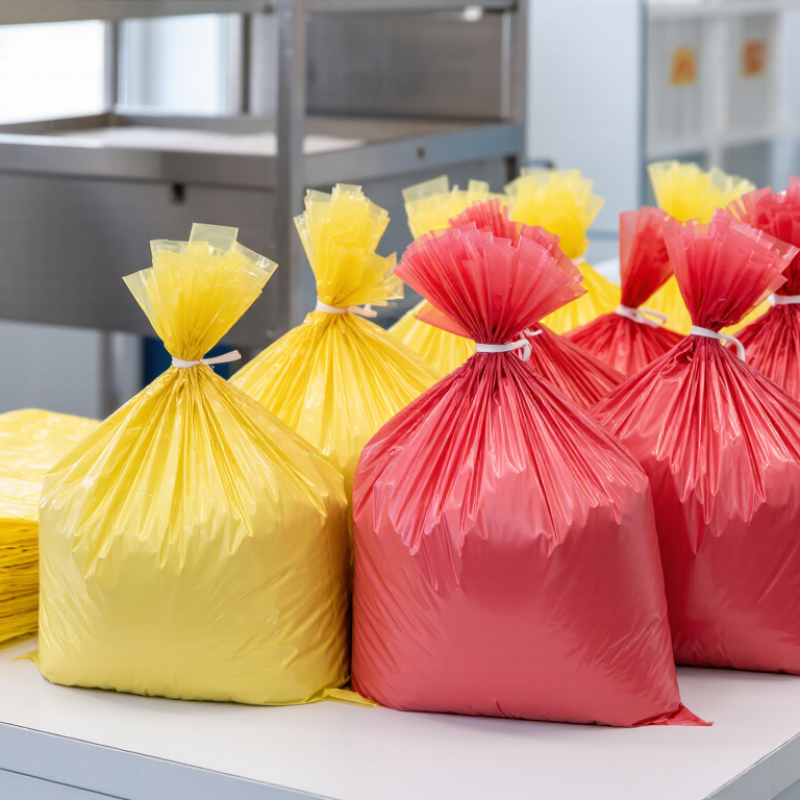
Medical waste bags support segregation at the point of disposal; they are not universal containers. Staff use designated bags for contaminated dressings, swabs, and other non-sharp clinical waste. The World Health Organization’s 2024 Health-care Waste fact sheet estimates that about 85% of healthcare waste is general, non-hazardous waste, while 15% is hazardous. That split matters. Treating every item as hazardous can increase handling and disposal demands, while incorrect sorting can expose cleaners and clinical staff. A blood-stained gauze pad belongs in the stream specified by the facility’s waste procedure, not automatically in an ordinary bin.
Bags should suit the waste, remain intact, and be closed before they are overfilled. Sharps need puncture-resistant containers, not flexible bags. Color coding and labeling vary by location, so workers should follow their facility’s written system rather than assume one color means the same thing everywhere. That distinction sounds simple, but busy wards can make it easy to miss. WHO’s 2024 guidance also stresses segregation where waste is produced, reducing unnecessary mixing. A practical check is visual: can the bag hold its contents without stretching, leaking, or touching the floor? It is not a perfect test, but it catches obvious problems.
A practical comparison of ten common medical-waste bag use cases and design considerations. This is not a manufacturer ranking.
| No. | Waste stream or use case | Suitable bag design | Typical contents | Key handling considerations |
|---|---|---|---|---|
| 1 | General infectious waste | Leak-resistant, clearly labeled medical-waste bag; select a size suited to the collection container. | Non-sharp items contaminated with blood or other potentially infectious material, such as used gauze and disposable gloves. | Segregate at the point of generation. Do not overfill; close the bag securely before removal. |
| 2 | Blood- or body-fluid-soiled soft waste | Strong, leak-resistant bag used with a stable, closable collection bin. | Dressings, swabs, and other absorbent disposable materials. | Use a compatible secondary container if leakage is possible. Do not pour free liquids into the bag. |
| 3 | Contaminated personal protective equipment | Bag sized to prevent excessive compression, with secure closure and appropriate hazard marking. | Disposable gowns, masks, caps, and gloves from clinical or isolation areas when classified as regulated medical waste. | Follow facility segregation procedures; ordinary, uncontaminated refuse should not be placed in the medical-waste stream. |
| 4 | Outpatient and treatment-room waste | Small or medium leak-resistant bag placed in a dedicated, cleanable waste bin. | Non-sharp contaminated disposables generated during examinations and minor procedures. | Keep the waste bin accessible but away from clean supplies. Dispose of needles and other sharps in approved sharps containers. |
| 5 | Laboratory-contaminated soft materials | Durable, leak-resistant bag compatible with the laboratory’s validated treatment and disposal process. | Contaminated wipes, disposable protective wear, and similar non-sharp materials. | Laboratory cultures and other high-risk materials may require specific containment or treatment before disposal; follow biosafety procedures. |
| 6 | Microbiology cultures and stocks | A bag alone is generally not sufficient; use the designated sealed, leak-proof containment system for the required treatment process. | Culture plates, culture tubes, and materials containing concentrated microorganisms. | Use validated decontamination and handling procedures set by the facility. Do not place untreated cultures in an ordinary collection bag unless the approved procedure allows it. |
| 7 | Pathological or anatomical waste | Purpose-selected leak-proof packaging; a rigid or secondary container may be needed depending on the material and local procedure. | Tissues and other anatomical materials classified as medical waste. | Follow the facility’s dedicated collection, storage, and transport requirements. A standard thin bag may be unsuitable. |
| 8 | Pharmaceutical waste | Use only the packaging specified for the pharmaceutical-waste stream; a general infectious-waste bag may not be appropriate. | Discarded medicines and contaminated medicine-related materials, as classified by the facility. | Keep pharmaceutical waste separate from other waste streams. Apply local rules for controlled, hazardous, or returnable medicines. |
| 9 | Cytotoxic or hazardous-drug waste | Dedicated, clearly identified packaging compatible with the facility’s hazardous-drug waste procedure. | Items contaminated with cytotoxic or other hazardous medicines, where classified as such. | Do not mix with ordinary infectious waste. Follow the drug-specific safety procedure and applicable disposal requirements. |
| 10 | Sharps and items that may puncture packaging | Not suitable for a flexible medical-waste bag; use an approved puncture-resistant sharps container. | Needles, blades, lancets, and other items capable of cutting or puncturing. | Close and replace sharps containers according to their fill line and facility procedure. Never push sharps into a bag by hand. |