How to Choose Plastic for Food Packaging?
How to Choose Plastic for Food Packaging?
Choosing Plastic For Food packaging is not simply a matter of selecting the clearest or cheapest material. The right choice must protect food, preserve freshness, and perform reliably during filling, transport, storage, and use. A thin film may look efficient, yet it can fail when sharp frozen products puncture it. A rigid container may resist impact, but it can add unnecessary material and transport weight. Small details matter.
Food-packaging scientist Dr. Richard W. Hartel has often emphasized, “Packaging is part of the food system, not merely a container.” That perspective changes the decision. Designers should examine oxygen and moisture barriers, sealing temperature, grease resistance, transparency, stiffness, and contact conditions. The package must also suit the food’s acidity, fat content, temperature, and expected shelf life. Testing should support every claim, especially when recycled content or multilayer structures are considered.
Regulatory compliance is essential. Approved food-contact materials, migration limits, traceability, and documented manufacturing controls cannot be treated as paperwork alone. They protect consumers and strengthen trust. I have learned that a material performing well in a laboratory may behave differently on a fast production line. That gap deserves attention. More testing helps.
There is no perfect polymer. Sometimes the most practical solution is not the most fashionable one. A responsible Plastic For Food decision balances safety, performance, resource use, and end-of-life realities. It also leaves room for doubt, because packaging choices should improve through evidence rather than confident assumptions.

Define Food Packaging Needs and Safety Requirements
How to Choose Plastic for Food Packaging?
Define the food before choosing the plastic. A dry biscuit needs different protection than oily sauce or fresh meat. Record moisture, acidity, fat content, temperature, shelf life, and expected transport stress. These details determine whether the package needs barrier layers, flexibility, puncture resistance, or heat stability. Packaging generated about 40% of global plastic waste in 2019, according to the OECD Global Plastics Outlook (2022). A poor material choice can increase both spoilage and waste.
Safety must follow the intended use. Ask what substances could migrate into the food during filling, storage, or heating. Check compliance with applicable food-contact rules, such as Regulation (EU) No 10/2011 or relevant national requirements. Suppliers should provide composition details, declarations of compliance, and migration-test results. Testing should reflect real conditions, not only room-temperature storage. Hot oil, acidic sauce, and repeated freezing can expose weaknesses quickly. They are not theoretical risks.
Recycled content requires careful verification. Its origin, cleaning process, and batch consistency may affect food-contact safety. The United Nations Environment Programme’s Turning off the Tap report (2023) emphasizes redesign, reuse, and better material systems. Those goals matter, but safety cannot become an afterthought. In practice, I would test the complete package, including ink, adhesive, seal, and closure. We sometimes focus too narrowly on the plastic resin. That is a mistake. Small trials under actual filling and distribution conditions can reveal warping, odor transfer, weak seals, or unexpected migration before commercial production.
Compare Plastic Types and Their Food-Contact Properties
How to Choose Plastic for Food Packaging?
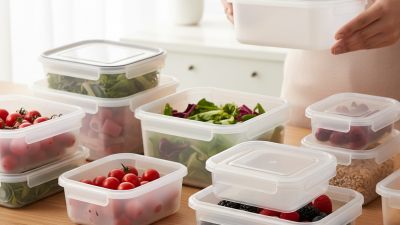
Choosing plastic for food packaging starts with the food, not the package shape. PET offers good clarity, strength, and protection against moisture and gases. It suits bottled drinks, sauces, and many cold foods. HDPE is tougher and more opaque. It resists moisture well, making it practical for milk, yogurt, and household food containers. PP handles higher temperatures than many common plastics. It is often used for hot-fill containers, takeaway boxes, and reusable tubs, but the exact grade still matters.
LDPE is soft and flexible. It works well for films, squeeze bottles, and heat-sealing layers. However, its oxygen barrier is limited. For fatty or oxygen-sensitive foods, a single LDPE layer may not provide enough protection. Multilayer packaging can combine different properties, such as stiffness, sealing, and gas resistance. That sounds efficient. It also makes recycling more difficult.
Food-contact safety depends on more than the resin name. Packaging should be tested for migration under its real conditions of use, including heat, acidity, fat content, storage time, and repeated contact. A recycling code does not automatically prove food-contact suitability. I have seen packaging choices fail because temperature limits were treated as suggestions. That is a costly assumption. A reliable specification should identify the material grade, additives, contact conditions, and supporting compliance documents. Even then, performance can change after filling, sealing, transport, or long storage.
Check Regulations, Sustainability, and Recycling Options
How to Choose Plastic for Food Packaging?
Choosing plastic for food packaging starts with safety, but sustainability deserves equal attention. Confirm food-contact compliance in the target market, including migration limits, additives, and manufacturing controls. A package may look harmless while unsuitable chemicals move into oily or acidic foods. Check technical declarations and independent laboratory results. The OECD’s Global Plastics Outlook estimates that only 9% of global plastic waste was recycled in 2019. That figure should influence material selection.
Recycling options depend on real collection systems, not only package labels. The Ellen MacArthur Foundation reports that flexible plastic packaging remains difficult to recycle at scale. A simple mono-material structure can improve sorting and processing. Avoid unnecessary layers, dark pigments, and attached components when they reduce recovery. Recycled content can lower virgin plastic demand, but food-contact rules and contamination risks require careful verification. I would not call any option perfect. Design trade-offs remain.
Tips: Ask recyclers what they actually accept locally. Request evidence, not broad claims. Compare the package’s weight, shelf-life performance, and end-of-life route. UNEP’s 2023 “Turning off the Tap” report identifies reuse, better design, and improved recycling as complementary solutions. In practice, a lighter package can still create waste if it fails early. A recyclable symbol is not a guarantee. Test the full system, from filling line to household collection, before making a final decision.
Select the Best Plastic for the Packaging Application
How to Choose Plastic for Food Packaging?
Selecting the best plastic depends on the packaging application, not appearance alone. A clear pouch, frozen tray, and hot-fill bottle face different stresses. In practical packaging trials, examine acidity, oil content, moisture, oxygen exposure, and storage temperature. Small details matter. A fatty sauce may affect taste or seal strength when paired with an unsuitable polymer. A crisp snack can lose texture when moisture enters through a weak barrier. The better question is not, “Which plastic is strongest?” It is, “Which plastic protects this food throughout its real journey?”
Polyethylene can support flexible films, while polypropylene often handles higher filling temperatures. Polyethylene terephthalate may provide stiffness, clarity, and useful gas resistance. However, material selection should match the product and equipment. A multilayer structure may improve protection, but it can create recycling challenges. That trade-off deserves careful review. Cost alone is a poor guide.
Testing turns assumptions into evidence. Check seal performance, drop resistance, compression strength, and shelf-life behavior. Evaluate the package after refrigeration, heating, and transport. Food-contact documentation and migration testing must support the intended use and local requirements. A package can look excellent during a short trial and still fail after weeks of storage. I have learned that line speed is easy to overlook. Yet a material that seals slowly may increase waste, even when its laboratory results appear impressive. Real production conditions need honest measurement.