China Top Disposable Plastic Products You Should Know About?
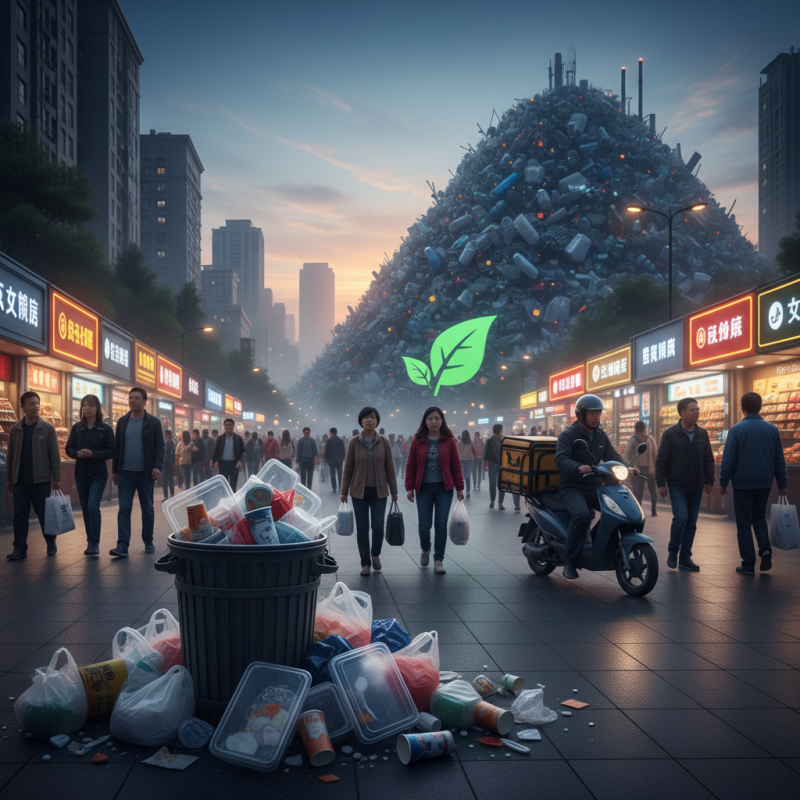
The rise of disposable plastic products has transformed daily life in China. These items range from basic utensils to complex packaging solutions. They are convenient and often cost-effective. However, with their popularity comes a growing concern about environmental impact.
Disposable plastic plays a dual role. It provides ease and efficiency but also poses significant challenges. The convenience of these products encourages a throwaway culture, leading to mountains of plastic waste. Some manufacturers are attempting to address this issue, but more innovation is needed.
Awareness is crucial for responsible consumption. While disposable plastic serves specific needs, users must reflect on their choices. Understanding the balance between convenience and sustainability is key. China’s market is evolving, and sustainable alternatives are emerging. However, consumer habits will need to change for real progress to occur.
Overview of Disposable Plastic Products in China
In recent years, the disposable plastic products industry in China has boomed. According to the China Plastics Industry Association, the market for disposable plastics is expected to reach 50 billion USD by 2025. This growth is driven by consumer demand for convenience and hygienic solutions.
Disposable plastic tableware, such as plates and cutlery, has gained immense popularity. These products are not only lightweight but also cost-effective for large gatherings and events. However, environmental concerns are rising. Many disposable items contribute to waste. In 2020, China generated over 6 million tons of plastic waste, a significant portion from disposable products.
Tips: Opt for biodegradable options when possible. Educate yourself on recycling practices in your area. Awareness can lead to better choices.
Another noteworthy category is plastic bags. They are widely used across retail and food sectors. In 2022, around 80 billion plastic bags were consumed in China. This raises questions about sustainability. While the convenience is clear, the long-term impact on the environment must be considered.
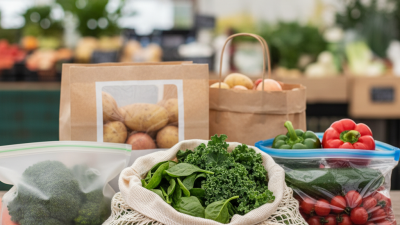
Tips: Carry a reusable bag. It may seem small, but each action counts. Together, we can mitigate plastic pollution.
Popular Types of Disposable Plastic Products in China
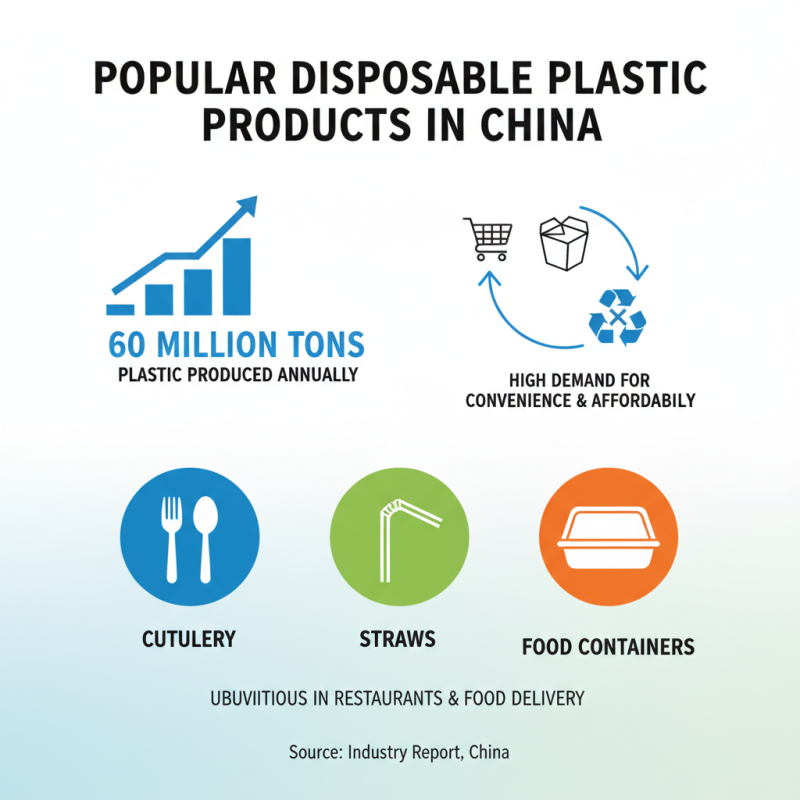
In China, the disposable plastic products market is vast and diverse. According to a recent industry report, the country produces over 60 million tons of plastic annually, with a significant portion dedicated to single-use items. The demand for disposable plastic products remains high due to convenience and affordability. Items like plastic cutlery, straws, and food containers are ubiquitous in restaurants and food delivery services.
Plastic cutlery and plates are particularly popular among consumers. These products are lightweight and reduce cleanup time. Yet, environmental concerns are growing. Reports show that nearly 30% of urban waste consists of plastic. The pressure to find sustainable alternatives is mounting. Many restaurants face scrutiny over their plastic usage.
Another area of growth is biodegradable plastics. This innovation offers a potential solution to pollution. However, their production and disposal must be carefully managed. Not all biodegradable products break down effectively in natural environments. It's crucial for manufacturers to balance convenience and ecological responsibility. As the market evolves, greater awareness and responsibility in plastic use will be essential.
Environmental Impact of Disposable Plastics in China
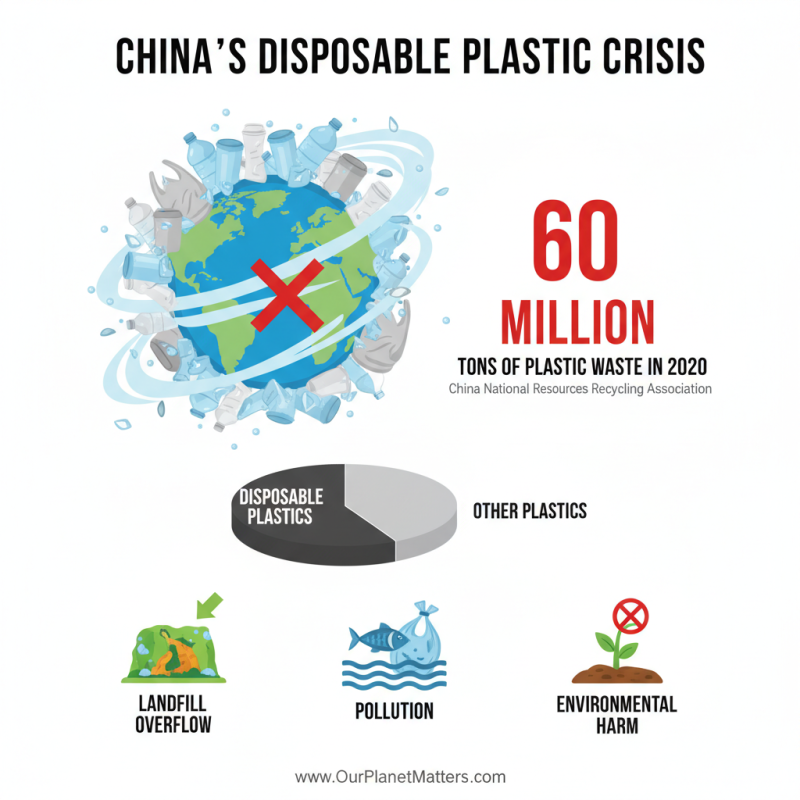
The environmental impact of disposable plastics in China is staggering. According to a report by the China National Resources Recycling Association, China produced over 60 million tons of plastic waste in 2020. A significant portion of this waste consists of disposable plastics, which contribute to pollution and landfill overflow.
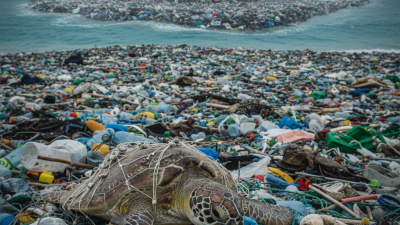
Single-use items, such as plastic bags and cutlery, are prevalent across many sectors. In urban areas, an estimated 56 billion plastic bags are used annually, leading to increased environmental strain. Many of these items are not recycled and end up in oceans, harming marine ecosystems. The World Wildlife Fund highlights that over 100,000 marine animals die each year due to plastic pollution.
Despite efforts to reduce waste, challenges remain. Limited recycling facilities struggle to process the existing plastic waste. Education on responsible disposal is lacking. Furthermore, consumer habits often lean towards convenience over sustainability, creating a cyclical issue. Addressing these challenges is crucial for a cleaner future.
Regulations and Policies Regarding Plastic Use in China
China has been addressing plastic pollution with strict regulations. The government recognizes the environmental impact of disposable plastics. New policies are aimed at reducing plastic waste in daily life. These measures include bans on single-use plastic bags in major cities. Many businesses feel the pressure to adapt.
In recent years, the "Plastic Pollution Control Action Plan" was initiated. This plan outlines specific targets for plastic reduction. By 2025, China aims to cut down on plastic consumption across various sectors. However, implementation can be uneven. Some regions follow the rules closely, while others lag behind. Public awareness campaigns are improving but still require more effort.
Many consumers are unaware of the regulations. Education about plastic use is essential for lasting change. As the government tightens regulations, businesses must innovate. Transitioning to sustainable alternatives remains a challenge. It requires not just compliance but a shift in mindset. The journey towards a greener future is ongoing, with both progress and hurdles.
Future Trends in Disposable Plastic Product Manufacturing in China
The disposable plastic products market in China is evolving rapidly. New manufacturing techniques are being explored to reduce environmental impact. The focus is shifting toward biodegradable alternatives and reduced plastic usage. This trend is driven by a global push for sustainability and consumer demand for eco-friendly options.
Various manufacturers are experimenting with innovative materials. Some are incorporating plant-based inputs, which may break down more easily in nature. However, challenges remain in scalability and cost-effectiveness. There is a need for further research and investment in these areas. In addition, the market is witnessing fluctuations in regulation and consumer attitudes, which can complicate production strategies.
The future is uncertain, yet promising. There is potential for growth in the sector, provided companies prioritize sustainability over traditional manufacturing methods. Increased regulations may also influence these trends. Navigating this landscape requires adaptability and foresight from manufacturers. Balancing profit with environmental responsibility will be crucial for long-term success.
China Top Disposable Plastic Products You Should Know About
| Product Category |
Market Size (2023) |
Growth Rate (2024-2029) |
Sustainability Trends |
| Disposable Cutlery |
$2.5 billion |
5.2% |
Biodegradable options gaining popularity |
| Plastic Cups |
$3.4 billion |
4.8% |
Shift towards compostable materials |
| Food Containers |
$1.8 billion |
6.5% |
Reusable designs becoming mainstream |
| Plastic Straws |
$1.2 billion |
3.0% |
Alternative materials on the rise |
| Packaging Films |
$4.0 billion |
5.5% |
Focus on recyclability |