Leave Your Message
Global buyers rarely choose a Ziplock Bag by appearance alone. They compare seal strength, film thickness, dimensions, clarity, and carton efficiency. A bakery may need a food-contact pouch with a dependable double track. A laboratory supplier may prefer a clean, transparent bag for organized sample handling. Retail buyers often value writable panels, hanging holes, and practical pack counts. Each use demands different evidence.
In sourcing projects, small details can create large costs. A weak slider can frustrate customers. An oversized bag wastes warehouse space. Thin film may save money, yet fail during transport. Buyers should request samples, confirm material specifications, and test seals under realistic pressure. Polyethylene remains common, while recycled-content options may suit selected packaging programs. However, sustainability claims need documentation, not attractive wording. This is where supplier audits, factory records, and consistent batch inspection matter. Ask for measurable data.
Leading types include standard resealable bags, slider bags, gusseted bags, stand-up pouches, freezer-grade bags, and anti-static versions for suitable industrial applications. Not every type fits every market. Regional labeling, recycling rules, and food-contact requirements may also affect purchasing decisions. I would not recommend the cheapest offer after reviewing one quotation. A reliable supplier should explain limitations clearly, provide pre-shipment samples, and respond when specifications change. That honesty matters. This guide examines practical differences, common sourcing mistakes, and selection criteria that help global buyers purchase with greater confidence.
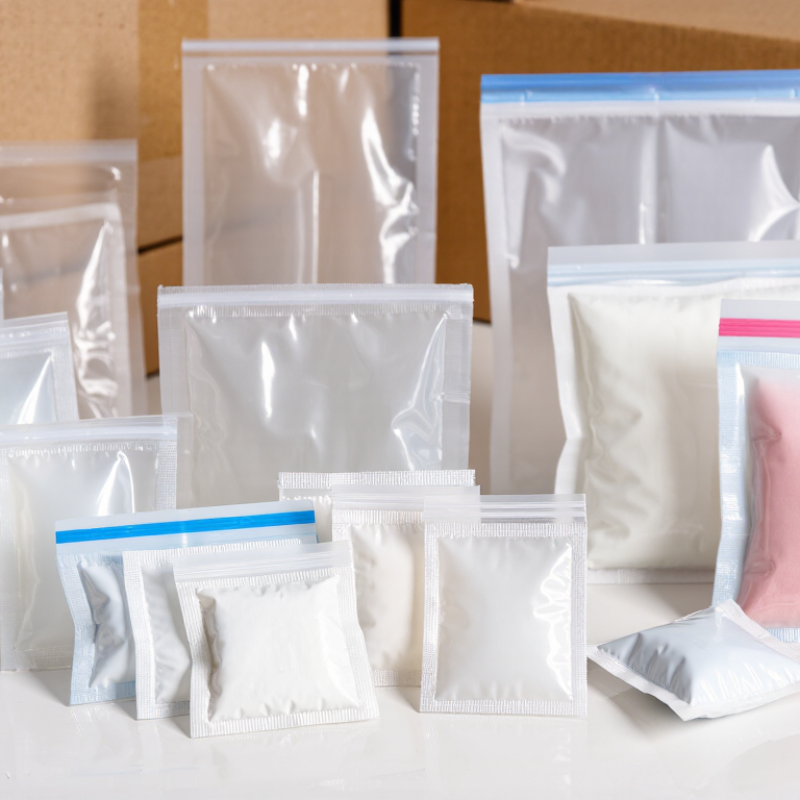
Top Ziplock Bag Types for Global Buyers
What Defines a Ziplock Bag Type for Global Buyers
For global buyers, a ziplock bag type is defined by more than its opening. Material, thickness, seal design, dimensions, and end use all matter. Polyethylene bags suit general storage and flexible handling. Higher-barrier structures help limit moisture, oxygen, or odor transfer. A 50-micron bag feels very different from a 100-micron bag. Buyers should test both before approving a specification.
Closure geometry is equally important. A single-track zipper supports quick access, while reinforced profiles provide stronger repeated use. A reliable bag should open smoothly, close with clear pressure, and resist channel leakage. It should also remain functional after cold storage or transport vibration. Small details matter.
Packaging data supports this practical approach. The Flexible Packaging Association reported approximately 39.4 billion dollars in U.S. flexible-packaging sales in its 2024 industry report. Smithers’ 2024 flexible-packaging analysis highlights barrier performance, material reduction, and recyclability as key development priorities. These trends influence export packaging decisions, even for simple resealable bags.
Compliance documents should match the destination market and intended contact use. Buyers can request food-contact declarations, migration testing, material identification, and production-batch records. Dimensions need attention too. A listed 200-by-300-millimeter size may exclude the zipper or include manufacturing tolerance. That difference can disrupt automated packing.
Not every “recyclable” claim is equally useful. Availability of collection systems remains uneven. This is where buyers must question assumptions, not repeat catalog language. A clear technical sheet, sample test, and traceable quality record usually define the safest bag type.
| Ziplock Bag Type | Closure System | Typical Material Structure | Common Applications | Protection Level | Reusability | Typical Format and Size Range | Key Buying Considerations |
|---|---|---|---|---|---|---|---|
| Standard Press-to-Close Bag | Interlocking plastic tracks sealed by pressing the two profiles together | Low-density polyethylene (LDPE) or polyethylene (PE) | Food portions, documents, small hardware, stationery, household storage | Basic protection against dust, spills and short-term moisture exposure | Usually reusable | Flat pouch; commonly available from small sample sizes to large storage bags | Film thickness, seal alignment, opening force, transparency and dimensional consistency |
| Slider Zipper Bag | Plastic slider that opens and closes a pre-formed zipper track | PE film, sometimes combined with multilayer plastic film | Snacks, frozen food, travel items, craft supplies and frequently accessed contents | Better user convenience; protection depends on film and zipper quality | Designed for repeated opening | Flat or gusseted pouch; small retail packs through large household formats | Slider durability, smooth operation, track engagement and resistance to accidental opening |
| Heavy-Duty Reclosable Bag | Reinforced press-to-close or zipper profile | Thicker PE film, often with reinforced edges or a stronger closure area | Tools, automotive parts, industrial components, garments and bulk storage | Higher resistance to tearing, puncture and handling stress than light-gauge bags | Reusable when undamaged | Flat or gusseted formats; medium to extra-large dimensions | Material gauge, tensile strength, puncture resistance, load capacity and weld quality |
| Stand-Up Zipper Pouch | Press-to-close zipper positioned near the pouch opening | Multilayer flexible film, such as PE, polypropylene (PP), polyester (PET) or barrier laminates | Dry food, pet treats, powders, personal-care products and household refills | Good presentation and stability; barrier performance varies by laminate | Often reusable | Bottom-gusset pouch; commonly produced in small to medium retail sizes | Stand-up stability, zipper position, filling method, seal integrity and print requirements |
| Flat Zipper Pouch | Reclosable zipper across the top edge | Single-layer PE or multilayer flexible film | Snacks, samples, accessories, cosmetics, medical consumables and promotional kits | Basic to moderate protection depending on film thickness and structure | Generally reusable | Rectangular flat pouch; suitable for small and medium contents | Pack dimensions, zipper width, filling tolerance, transparency and hanging-hole options |
| Gusseted Zipper Bag | Press-to-close or slider zipper with expandable side or bottom gussets | PE or multilayer flexible film selected according to product requirements | Bulky food items, garments, bedding accessories, industrial parts and retail packs | Greater usable volume; protection depends on the film, seals and closure design | Suitable for repeated use | Expandable side- or bottom-gusset format; medium to large capacities | Gusset depth, filling efficiency, standing performance, closure strength and carton utilization |
| Barrier Zipper Bag | Press-to-close or slider zipper combined with a high-barrier flexible structure | Multilayer laminate, which may include PET, nylon, PE, PP, EVOH or aluminum foil depending on the specification | Coffee, dehydrated foods, sensitive powders, pet food and products affected by oxygen or light | High barrier when properly specified for oxygen, moisture or light protection | Usually reusable for dry storage | Flat or stand-up pouch; small retail packs through larger food-service sizes | Oxygen transmission rate, water-vapor transmission rate, light protection, seal performance and laminate recyclability |
| Tamper-Evident Zipper Bag | Reclosable zipper combined with a tear strip, sealed header or other visible opening indicator | PE or multilayer flexible film with an added tamper-evident feature | Healthcare supplies, consumer goods, accessories, kits and controlled-distribution items | Provides visible evidence of opening; it is not automatically a security or child-resistant package | Reclosable after initial opening | Flat or stand-up pouch; small to medium formats are common | Evidence feature reliability, opening instructions, seal strength, regulatory requirements and traceability |
| Static-Control Zipper Bag | Press-to-close zipper made with static-control packaging materials | Antistatic or static-dissipative plastic film, commonly specified for electronics handling | Electronic components, circuit boards, sensors and sensitive parts | Reduces electrostatic risks when the correct material and handling procedure are used | Reusable if clean and undamaged | Flat bag; small component sizes through larger board-compatible formats | Surface resistance, shielding requirement, cleanliness, thickness, transparency and applicable test standards |
| Recycled-Content Zipper Bag | Press-to-close or slider zipper | Plastic film containing post-consumer or post-industrial recycled content, subject to the product specification | Retail goods, apparel, accessories, non-sensitive household items and promotional packaging | Performance varies according to recycled-content level, film formulation and manufacturing controls | Often reusable | Flat, gusseted or stand-up formats in custom and stock sizes | Verified recycled-content percentage, food-contact suitability, odor, clarity, strength and local recycling rules |